

- Market News
Fed Holds Rates as Tech Earnings Split Markets
The Federal Reserve held rates steady as mixed tech earnings and climbing Treasury yields sent global market sentiment in different directions.
AI Spending and Oil Prices Unsettle Global Markets
Heavy AI spending by tech giants and surging oil prices rattled global markets Thursday, with key earnings and data ahead.
UK GDP and US Retail Sales Drive Markets
UK GDP surprised to the upside Thursday as markets shifted focus toward US retail sales and jobless claims releases.
Geopolitical Tensions and Oil Prices Shake Global Markets
Rising geopolitical tensions and surging oil prices rattled global markets Thursday, with traders closely watching US unemployment claims for direction.



- Market News
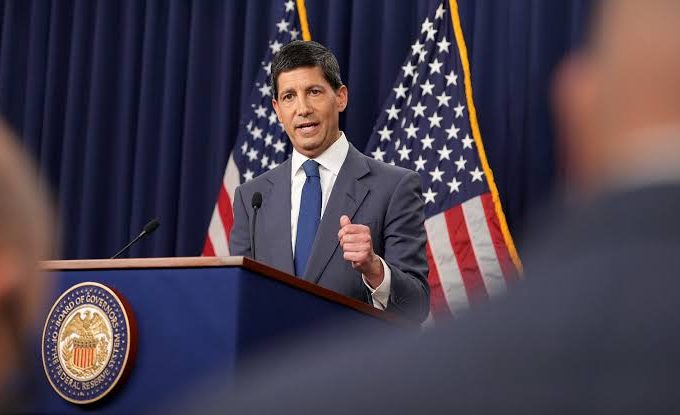
Fed Holds Rates as Tech Earnings Split Markets
The Federal Reserve held rates steady as mixed tech earnings and climbing Treasury yields sent global market sentiment in different directions.
AI Spending and Oil Prices Unsettle Global Markets
Heavy AI spending by tech giants and surging oil prices rattled global markets Thursday, with key earnings and data ahead.
UK GDP and US Retail Sales Drive Markets
UK GDP surprised to the upside Thursday as markets shifted focus toward US retail sales and jobless claims releases.
Geopolitical Tensions and Oil Prices Shake Global Markets
Rising geopolitical tensions and surging oil prices rattled global markets Thursday, with traders closely watching US unemployment claims for direction.


Asia-Pacific Markets Slide as U.S. Imposes New Tariffs
 Market NewsFebruary 3, 20253 Mins read
Asia-Pacific markets slide as the U.S. imposes new tariffs on Canada, Mexico, and China, with global stocks and commodities showing signs of uncertainty.
Global Markets React to U.S. Tariff Announcement
Asia-Pacific stock markets took a significant hit on Monday following the weekend’s U.S. President Donald Trump’s decision to impose tariffs on Canada, Mexico, and China. This move rattled investor confidence, leading to widespread declines across the region’s major markets.
In Japan, the Nikkei 225 plummeted by 2.69%, while the broader Topix index dropped by 1.87%. South Korea’s Kospi fell 2.52%, and the Kosdaq tumbled 2.79%. Meanwhile, Hong Kong’s Hang Seng Index saw a decline of 0.38% at the opening bell. Australia’s S&P/ASX 200 suffered a 1.65% drop, further reflecting the global unease caused by the tariff announcement.
Tariff Impact and U.S. Trade Policy Shift
President Trump’s tariff decree, signed on Saturday, imposes a 25% tariff on imports from Mexico and Canada and a 10% tariff on goods from China, effective Tuesday. The new trade measures target roughly $1.6 trillion in annual U.S. trade with these three nations. Canadian energy exports will be subject to a reduced 10% tariff, while other products will face the full 25% penalty.
The announcement has sent shockwaves through global markets, signaling a sharp shift in U.S. trade policy. Analysts warn that the tariffs could further strain relations with these key trading partners and disrupt supply chains. The uncertainty created by this move is evident in today’s market performance across the Asia-Pacific region.
Economic Data Weighs on Sentiment
On top of the tariff announcement, recent economic data also contributed to investor concern. Canada’s GDP growth for December came in at -0.2%, slightly worse than the expected -0.1% contraction. Meanwhile, the December U.S. Core PCE Price Index held steady at 0.2%, which aligns with expectations.
Asia-Pacific Markets Slide as U.S. Imposes New Tariffs
The Nifty 50 slipped 0.69% in India, and the Sensex fell 0.88%. However, positive news from India’s Union Budget—announced over the weekend—offered some reassurance. The budget introduced income tax relief for the middle class and set a goal to reduce the fiscal deficit to 4.4% of GDP in the coming fiscal year, down from the revised 4.8%. Despite the positive budget, broader market sentiment remained negative, driven by global uncertainties.
Traders expect Chinese markets to react once they resume trading after the Lunar New Year holiday. In the meantime, China’s Caixin/S&P Global services PMI data is anticipated later today, with analysts predicting a reading of 50.5, indicating moderate expansion in the services sector.
Commodities and Bonds Reflect Caution
Commodities markets also felt the pressure of global uncertainty. Gold was down 0.43% at $2817.35 per ounce, and silver dropped 0.68% to $32.05. Oil prices showed mixed results: Brent crude rose 1.59% to $76.59 per barrel, while WTI crude increased 2.13% to $74.14, signaling potential supply concerns in the energy sector.
Meanwhile, global bond yields showed minimal movement, with the U.S. 10-year Treasury yield holding steady at 4.536%, while the UK and German 10-year yields stood at 4.5340% and 2.458%, respectively.
Wall Street’s Response and Outlook
U.S. markets also ended the week on a sour note. The S&P 500 closed down 0.50% at 6,040.53, and the Dow Jones Industrial Average fell by 0.75%, or 337.47 points, to 44,544.66. The Nasdaq Composite, heavily influenced by tech stocks, ended the session lower.
As the effects of the tariff imposition continue reverberating, investors will likely remain on edge in the coming days. The uncertainty around future trade relations and the impact of tariffs on global supply chains will continue to shape market movements.
Upcoming Events to Watch
Investors will closely monitor economic data releases for further insights into market direction. Key upcoming events include the U.S. ISM Manufacturing PMI at 2:45 PM GMT and the U.S. ISM Manufacturing Prices report at 3:00 PM GMT.
As the situation develops, market participants will closely monitor potential policy responses and new economic data that could offer a clearer picture of the global economic landscape.
Stay Updated with the Latest Market News. Visit our YouTube Channel for the Latest Forex Analysis.



Related Articles
Fed Holds Rates as Tech Earnings Split Markets
The Federal Reserve held rates steady as mixed tech earnings and climbing...
AI Spending and Oil Prices Unsettle Global Markets
Heavy AI spending by tech giants and surging oil prices rattled global...
UK GDP and US Retail Sales Drive Markets
UK GDP surprised to the upside Thursday as markets shifted focus toward...
Geopolitical Tensions and Oil Prices Shake Global Markets
Rising geopolitical tensions and surging oil prices rattled global markets Thursday, with...
Leave a comment